


Cycling in Greece: a national survey
How is cycling used in Greece today? What are the biggest challenges cyclists face? What interventions can make cycling safer and more attractive for everyone?
To answer these questions, we conducted a nationwide survey in collaboration with the Aristotle University of Thessaloniki with the participation of 637 cyclists from all over Greece. The results capture the real experience of bicycle users and highlight both the significant challenges and the great potential for the development of cycling in the country.
Main findings
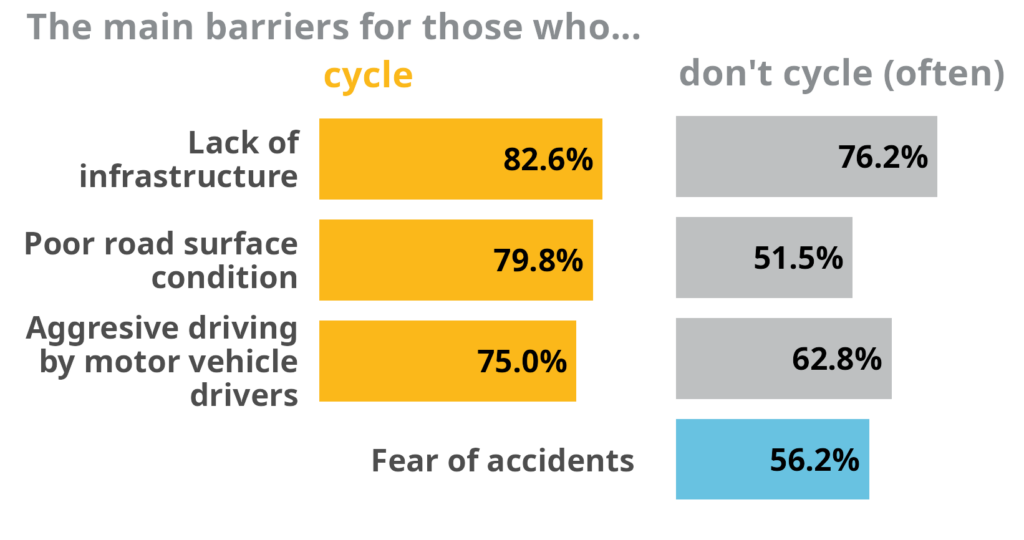
1. Lack of Safety Remains the Biggest Obstacle
The feeling of insecurity is the most important factor limiting bicycle use in Greece. The lack of continuous bicycle networks, poor road maintenance, and aggressive driving by car drivers discourage both existing and potential users.
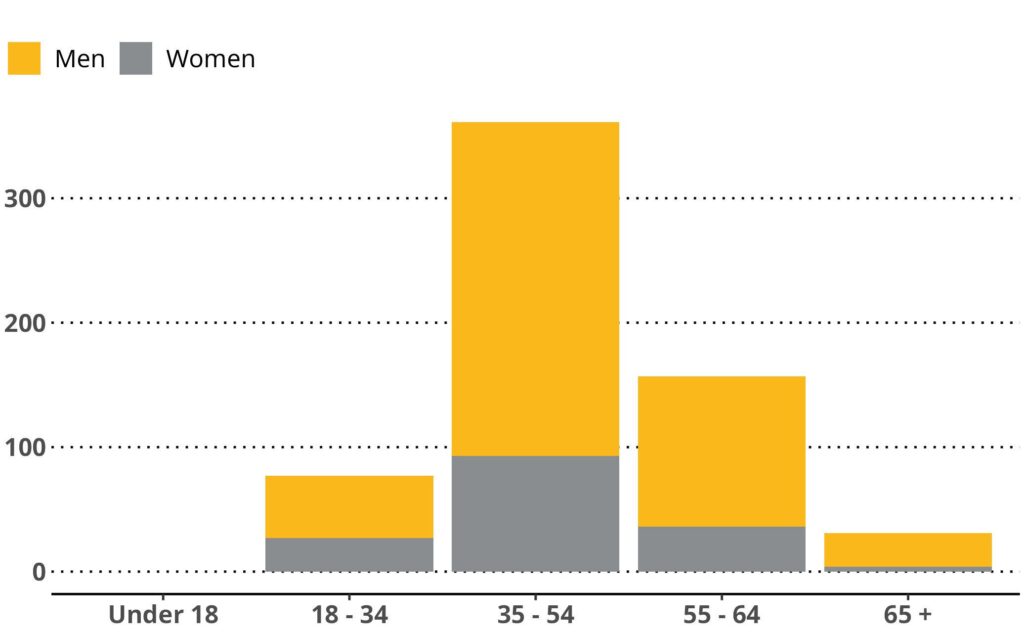
2. The Bicycle is Mostly Used by Middle-Aged Men
Women and young people are still much less represented, suggesting that the current environment does not adequately meet the needs of all users.
3. Electric Bikes Are Gaining Ground
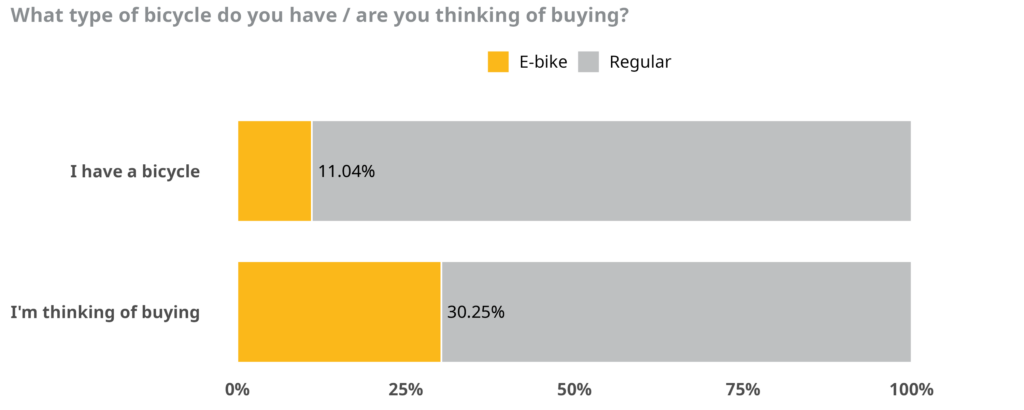
Interest in e-bikes is growing: almost one in three participants say that the next bike they are considering buying will be electric. They acknowledge that electric bikes make cycling more accessible, but cite high costs and fear of theft as barriers to their use.
4. Cycling is increasingly used for transportation and tourism
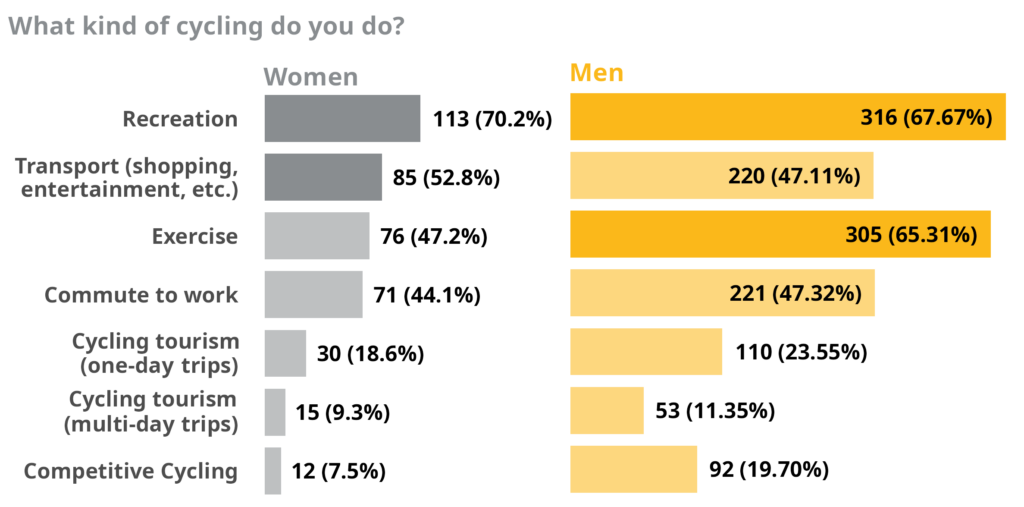
Although recreation remains an important reason for cycling, more and more users are choosing it for daily transportation, shopping and entertainment.
Our research confirms that women and men use cycling differently: for men in our sample, the second most important reason for cycling is exercise, while for women, exercise is surpassed by daily transportation.
Cycling tourism is emerging as a sector with significant growth prospects for the country.
What needs to change?
Creation of Safe Cycling Infrastructure
The results of the research highlight the urgent need for investment in cycling infrastructure: continuous, separated and safe cycle paths, combined with an extensive network of low-traffic roads, connecting neighbourhoods, city centres, schools, commercial areas and public transport hubs.
Regular road maintenance, driver education and compliance with the Highway Code are also key prerequisites for improving safety.
Cycling for All
The low participation of women and young people highlights the need for targeted political and social interventions.
Improving road safety is a prerequisite, but increasing women’s participation also requires additional actions, such as promoting the use of personal or shared cargo bikes, which provide an efficient means of transport for shopping and small children. It is also important to involve women in the design of infrastructure to ensure that their needs are met.
At the same time, introducing cycling education in schools will help create a new generation of users who will integrate cycling into their daily lives.
Support for Electric Bicycles
The growing popularity of e-bicycles creates significant opportunities to expand the cycling community and attract new users. Incentives such as purchase subsidies, tax breaks and “bike to work” programs can help expand e-bike use. In addition, the creation of safe parking spaces will make their daily use more practicable.
Connecting with Public Transport and Developing Cycling Tourism
Cycling is now part of a broader sustainable mobility system.
Enhancing multi-modal travel requires safe routes to public transport stations, sufficient bicycle parking spaces, accessible infrastructure and suitable bicycle spaces on metros, trams and trains.
At the same time, Greece has significant potential for developing cycling tourism. Better connecting cycling to the rail network, promoting the three EuroVelo routes that cross the country, and creating attractive routes linked to tourist attractions can position the country as an important cycling tourism destination.
A strategic opportunity for Greece
Our research shows that the demand for cycling exists and is growing. To fully exploit this potential, coordinated policies for infrastructure, road safety, education, and economic incentives are needed.
With the right investments and a long-term vision, cycling can become a key pillar of sustainable mobility in Greece, for the benefit of citizens, local communities, and the environment.