


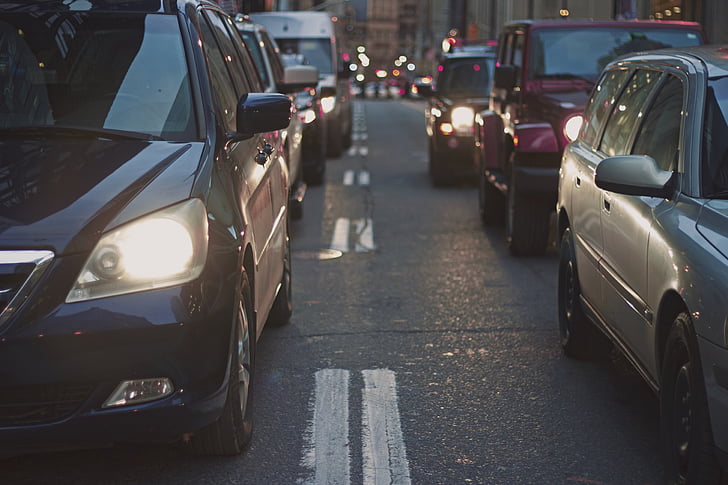
It’s a hot summer’s day, and our car driver, let’s call him Bob, approaches his car which has been parked by the curb. He feels the heat radiating from it but doesn’t give that a second thought. In fact, cars (especially dark-coloured cars) absorb incoming sunlight, then radiate it out as heat. With tens of thousands of parked cars, all that heat radiating back into the city adds up.
Bob starts the engine and quickly turns the AC on. AC systems expel heat, contributing to local temperature increases.
He drives away. Every petrol or diesel car is essentially an inefficient heat engine. Only a fraction of the fuel’s energy is used to move the vehicle. Most of the energy is lost as heat through exhaust gases, radiator cooling systems, brakes and tires. (Electric vehicles are more efficient, but they still produce waste heat from motors, batteries, brakes and tyres.)
Bob drives in roads and intersections made for cars, which have over the years replaced more and more trees and vegetation. Permeable and moist surfaces, like grass or soil, absorb less heat, while construction materials like asphalt or concrete used in car-dependent transport systems can absorb as much as 95% of the sun’s energy, which is then radiated back into the surrounding atmosphere.
Bob finds himself in a long line of slow moving traffic. Congestion increases fuel consumption, braking, idling, and accelerating. In streets with heavy traffic and limited ventilation, traffic has been shown to be a significant source of human-made heat.
Eventually, he makes it to the paved, heat-retaining parking lot, where his car will sit, absorbing sunlight and radiating heat until he’s back.
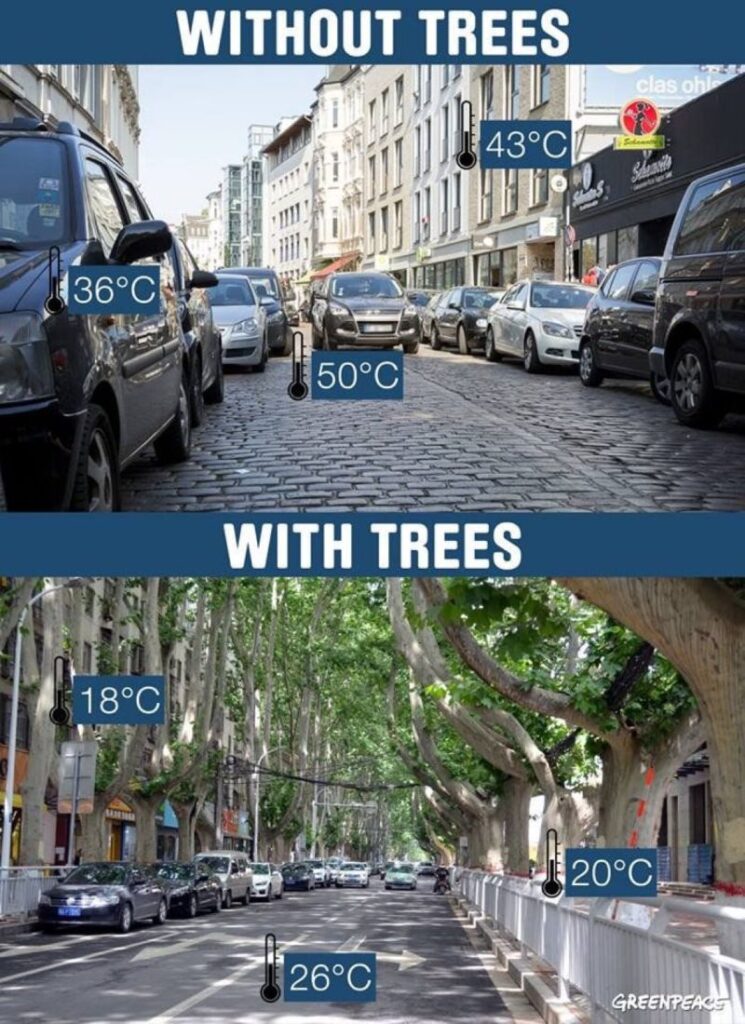
In effect, every car is a small mobile heater, for which we have built an environment full of heat-absorbing wide and exposed asphalt roads, intersections, parking lots and service stations, all contributing to making our urban lives uncomfortably – and, increasingly, dangerously hot.
Let’s not forget that this situation exacerbates urban inequalities, with those who can afford cars with AC and houses in leafy suburbs reaping all the benefits, and those who are forced to wait outdoors for public transport and live in low-quality homes on busy streets without green spaces suffering all the harms.
None of this is natural, or eternal. The first step is to open our eyes to the absurdity of car domination, and then join forces with others, such as the Cities for Cycling community, to demand change.
📥 Would you like to receive articles like this one straight to your mailbox every month? Subscribe to our newsletter!