


🇬🇷 News from Greece
- Newspaper article about our bicycle survey
- Some Greek cities are doing ok: Karditsa has almost as many bicycles as cars.
- Meanwhile, in the capital, the long-delayed Northern Cycling Corridor may be completed by the end of 2028…?
🌍 News from the world
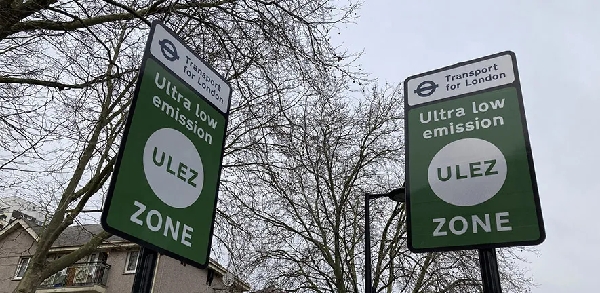
Good and bad news from recent research on London air pollution. First, the good: since the introduction of the air pollution reduction zones in London, emergency hospital admissions fell. Moreover, deaths linked to air pollution fell by an estimated 40% over the five years from 2019. Now the bad news: updated scientific evidence showed that the impact of air pollution on health was greater than previously understood: there are stronger associations between air pollution and cardiovascular conditions, dementia and diabetes, as well as respiratory diseases.
On the bright side, cyclists have a lower risk of dementia!
Norway opens a new 13-kilometre cycling superhighway linking the cities of Stavanger and Sandnes.
Cambridge opened England’s first “bicycle street”, in which motorists are expected to give way to cyclists. “Bicycle streets” (fahrradstraße) were introduced in the German city of Bremen in the early 1980s by Klaus Hinte, the head of the city’s transportation planning division. He developed the concept as an alternative to the more expensive infrastructure he saw in the Netherlands. When bicycle streets were later introduced in the Netherlands (fietsstraate), it was not because of financial constraints, but lack of space for separated infrastructure in certain areas. There are now bicycle streets in many countries around the world, including France (vélorue).
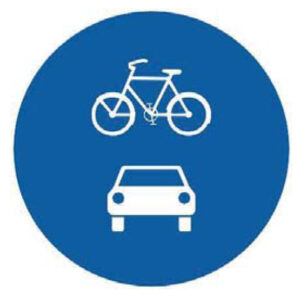
The closest thing we have in Greece is the sign P66a included in the new Highway Code, which signifies a route to be used by both bicycles and motorized vehicles. Has anyone seen this sign anywhere in the wild?
In the Netherlands, there has been an increase in road cycling injuries and deaths, which has led to misguided bicycle helmet campaigns, and equally misguided bans on fatbikes.
Now they are trialing a cycling speed limit of 20km/h, in response to the rapid growth of e-bikes on Dutch cycle paths. This will of course not help with the injuries and deaths caused by collisions with motor vehicles (still the primary cause of road cyclist deaths). But with people cycling into their 70s and 80s, slowing e-bikes down could make cycling feel safer for older users, and avoid some of the motorcycle-style injuries that are due to e-bikes being heavier and faster. Is a speed limit applied to all bicycles (including conventional ones that have no speedometers) the answer?
The problem is that, even in the generously wide Dutch cycle paths, there isn’t enough space for both slow and fast bicycles. Just above, we mentioned that the Dutch adopted the “bicycle street” for the roads where there was not enough space for separate bicycle infrastructure. Looking at the e-bike issue from Greece, where in many cities we have not yet started building infrastructure, and where there is generally little space, could a better solution from the start be the wider adoption of “bicycle streets”? A city where all streets belong to the slowest mode of transport (where cars give way to bicycles, and bicycles give way to pedestrians) seems to me to be a much more humane city.
📥 Would you like to receive cycling news from Greece and the world straight to your mailbox every month? Subscribe to our newsletter!